
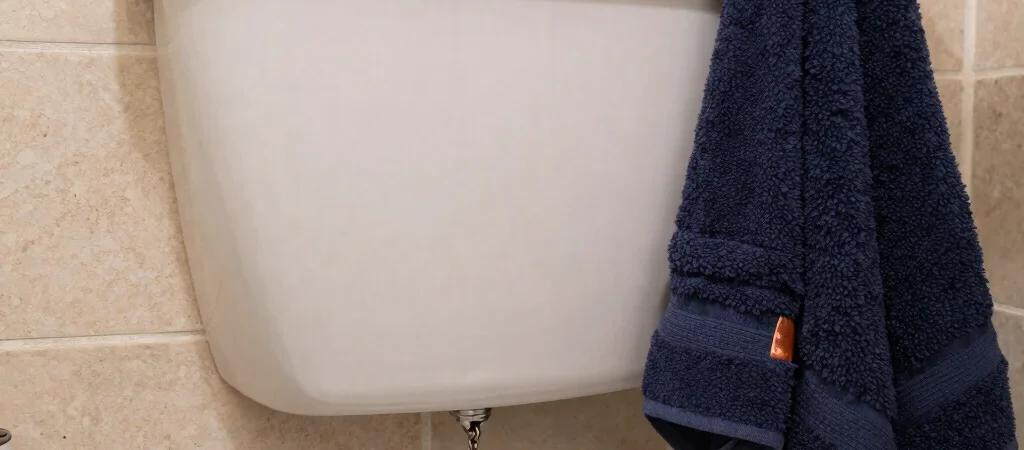
A toilet that refills on its own can be easy to ignore, especially when the sound is faint. Notice whether the noise is constant, starts after a flush, or returns every few minutes; each pattern offers a clue. Most first checks happen inside the tank, where the flapper, chain, and fill valve control how water moves.
Check the flapper and chain
Lift the tank lid carefully and flush once while watching the flapper, the rubber piece at the bottom of the tank. It should rise to let water into the bowl, then settle flat over the opening. If it catches on the chain or does not sit evenly, adjust the chain so it has a little slack without getting tangled.
Watch the water level
After the tank refills, look for water spilling into the upright overflow tube. If it does, the float may be set too high or the fill valve may not be shutting off properly. Many floats have a simple adjustment, but follow the instructions for your toilet model rather than forcing a part that resists.
Know when to stop
If the toilet still runs after a basic chain or float adjustment, or you see cracked parts, corrosion, or water around the base, contact a licensed plumber. Avoid repeatedly flushing a toilet that is close to overflowing. A small repair is usually easier to assess when you can describe what you saw and when the sound returns.