
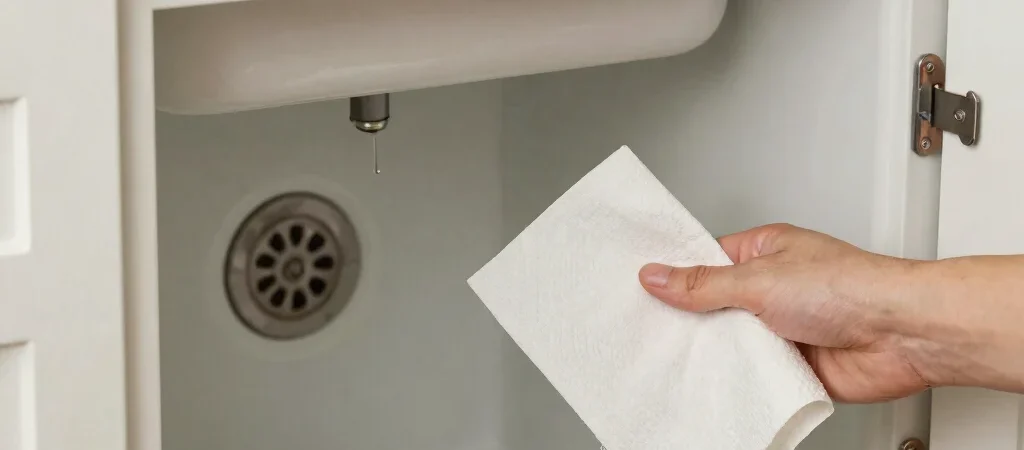
You open the cabinet to grab a dish towel and find a wet patch beneath the sink. Before tightening anything, move stored items out and dry the cabinet floor and pipes with a cloth. The leak’s timing matters: it may show up only when the faucet runs, when the basin drains, or even while everything is off.
Trace the water carefully
Place a dry paper towel beneath the supply lines, shutoff valves, and drain connections. Turn on the faucet briefly, then check which towel or fitting gets wet first. If the cabinet is dry until water goes down the drain, inspect the trap and nearby drain joints; if moisture appears while the faucet runs, look higher toward the supply connections.
Make only a gentle adjustment
A loose slip-joint nut on a drain trap may need a small hand-tightening, but overtightening plastic fittings can damage them. For a supply-line leak, turn the shutoff valve clockwise gently if it moves freely, and place a container or towel beneath the area. If a valve is stuck, corroded, or starts leaking when touched, leave it alone and call a professional.
Protect the cabinet meanwhile
Keep the cabinet open and remove standing water so the wood or flooring can dry. If the leak continues, shut off the affected fixture if you can do so safely, and arrange a repair rather than relying on a bowl or towel as a long-term fix. Take a photo of the wettest connection; it can help explain the problem when you call.